It’s been a good year… for blogging

Prior to joining twitter and starting to post here I became a regular visitor and sometime contributor to the clinic, over on cyclingnews.com and hence my outlook was dangerously skewed towards the effect doping was continuing to have on both professional and amateur road racing. However, over the past year I have written about music, about depression, and most recently about my own cycling efforts and ambitions.

I started this blog for two reasons:

  1. to learn how to use Twitter and WordPress to reach an audience; and
  2. to contribute to online discussion of cycling.

I wonder how I did? Continue reading

Audax fail: but fog + hills = fun

image

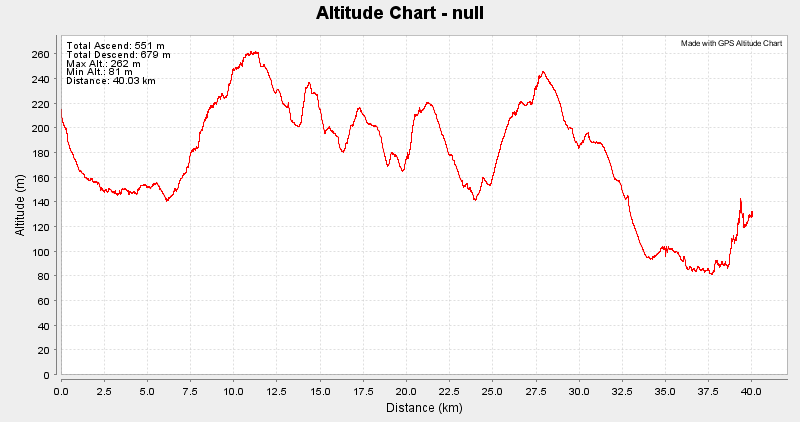
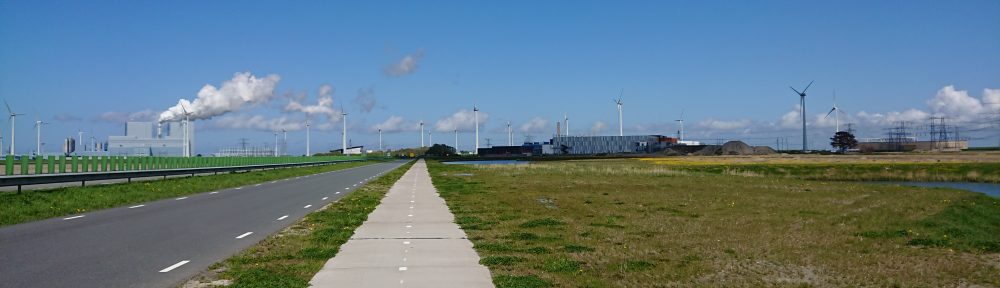
Failed to start the Eureka 210 today due to a sick primo: couldn’t justify being away for nearly 24 hours when he was so ill (was planning to stay near the start last night). However, did manage to get out today. 55 km, lots of hills, and about 45 minutes trying to pump up a tire with a defective mini-pump. Very foggy today, high winds too: good training!

Over Saddleworth and back by spandelles at Garmin Connect – Details.

We say audax, you say randonnée…

Having failed to enter a single event in the last few years I have finally cracked and entered into what I hope will be a more continuous engagement with allure libre long distance cycling. I rode my first ‘audax‘(as us Brits wrongly call them for historic reasons) or Brevet Randonneur in the early 1990s, and although I always intended to ride a Super Randonneur series (200, 300, 400 & 600 all in one season) I never made it past the 400 mark, although the sole 400 I did ride was a challenging ride through the hills of North Yorkshire.

So, November 13 is the Eureka 210, a Peak Audax production across the Cheshire Plain into Wales: fairly flat, but prone to high winds and frosty weather. This could be the start of my journey towards the start lines of LEL2013 or PBP2015. Maybe some hard riding will stop me banging on about doping all the time. I intend to write a little here about equipment, clothing, preparation (oh yes) and terrain (generally ‘scenic’), and hopefully about some of the curious characters that make UK long distance riding so special.

Henri Desgrange, I hope I will not disappoint you…

Drugs are bad, mkay: why I still care about dope in cycling

In Paul Fournel’s wonderful essay on doping in Need for the Bike (Trans. A. Stoeckl, 2003: 123-125) he notes that it is doping that often makes racing hard, rather than the opposite, and that the effect of doping on onlookers can be more potent than its effect on competitors. Fournel is pretty agnostic on a personal level: for him, doping is too embedded in the sport to ever go away.

Whilst I agree with some of Fournel’s analysis, my own views have evolved in a rather different direction. I have written on this blog about the psychology of anti-doping, about the boundaries between forbidden performance enhancement and what is acceptable (in relation to music), and about our perceptions of doping and their relationship with notions of truth. It has become clear to me that doping matters to me in a way it does not to Fournel, and in this essay I will try to explain why. Continue reading

Who will profit from the Tour of Beijing: what does the I Ching say?

Many learned minds have been debating the implications for professional cycling of the of the forthcoming Tour of Beijing. David Millar (@millarmind) suggested on twitter that some of the discussion was lacking Asian context:

@TheRaceRadio @Vaughters This discussion is very western.

Some discussion with @accidentobizaro led us to attempt to divine who will profit using the ancient Chinese oracle, the I Ching, and hence redress this ethnocentrism.  I stroke my long white beard of wisdom… Continue reading

Shooting the messenger: how to lose at anti-doping

In Italy, Mafia informers are shot or blown up. In cycling, dopers who inform on others aren’t blown up or shot, but they do risk being vilified for their actions by the very community they are acting to defend: some lose their jobs, some are insulted on twitter and in internet forums. Of course, their efforts to defend cycling from doping are paradoxically self-interested: most give up information in order to benefit themselves in some way, just as some keep quiet for the same reason. It is very rare for those directly involved in cycling to break Omerta otherwise (maybe Frankie Andreu is a nice example, although he had just a little help from the formidable Betsy). Continue reading

Commuting = Training?

As readers of this blog will know I have a slightly complex relationship with cycling. I do, like many non-racing cyclists, have an interest in maintaining and improving my cycling-specific fitness, and like many regard my riding as ‘training’, although given my lack of engagement with randonneuring at present, I am not quite sure what I am training for…

Continue reading

Sport and concussion: anecdotes, research and action

Yesterday’s Tour de France stage saw one rider abandon with concussion (only after other riders complained he was a danger to them) and another ride to the finish after having fairly obvious concussive symptoms. Many sports have had issues with traumatic brain injury (TBI), and have had to issue increasingly detailed guidance on how to identify TBI, and what to do. Rugby Union, for example, provides a range of guidance to officials to ensure that players with suspected TBI are not permitted to continue. It was reassuring to see one team doctor, Prentice Steffen, of Garmin Cervelo, looking for the same thing in cycling, prompted partly by Julian Dean’s experience after crashing in this year’s Volta a Catalunya.

Both my father and his best friend played contact sports. Both had experiences where they played on through concussion. Both had neurological problems in their sixties. Of course, these problems might have occurred anyway, but the link between moderate to severe TBI and later onset neurological disorders is well-founded.

Watching someone being encouraged to continue to compete after clear signs of TBI disgusts me, and this is what it looked like happened yesterday in the case of Chris Horner (whether such encouragement was implict or explicit). What on earth are medical professionals thinking when they permit such nonsense? Not only do they risk further crashes or exacerbating an original injury, they show how basic medical sense is being overruled by sporting motives. Of course, we can all miss the signs of concussion, but that is why clear guidance is necessary from the top down, and needs to be applied consistently.
In praise of Altigraph

Altigraph, a name that still makes my hairs stand on end.

la Berarde – col de Spandelles – Grand Ballon – col de la Schlucht

altigraph guideHow would you plan a cycling holiday in France? Perhaps you would plan it around gastronomy or viticulture; possibly around pragmatic considerations such as the availability of airports, campsites or gites; maybe you want to visit historical or cultural centres; or the Tour de France climbs. Given that France is such wonderful cycling destination one can easily succumb to the paralysis associated with a proliferation of uncontrolled and interacting variables. Continue reading

Cycling and depression: finding a balance

Ex-professional cyclist Tyler Hamilton (in the news again recently, which you will know unless you were asleep for 60 minutes) claimed in 2009 that his second positive test for doping (DHEA) was the result of his taking a herbal remedy to counter longstanding depression (Bonnie Ford of ESPN as usual does an excellent job of summarising here). Hamilton is not the only professional cyclist to have suffered from depression during or after their career, and I have often wondered about the relationship between training workload as a cyclist and mental health. I recently read two blog posts about depression by active cyclists (Scientist, you’re a failure & Drugs and Mental Healthcare) and this got me thinking about how exercise and mental health interact. In this post I write about my own experiences, share some academic research on the topic, and speculate a bit about depression and cycling in general. I am not a mental health professional (although I am an academic working in the area of empirical psychology) so please take my words with this in mind.

Continue reading