It’s been a good year… for blogging

Prior to joining twitter and starting to post here I became a regular visitor and sometime contributor to the clinic, over on cyclingnews.com and hence my outlook was dangerously skewed towards the effect doping was continuing to have on both professional and amateur road racing. However, over the past year I have written about music, about depression, and most recently about my own cycling efforts and ambitions.

I started this blog for two reasons:

  1. to learn how to use Twitter and WordPress to reach an audience; and
  2. to contribute to online discussion of cycling.

I wonder how I did? Continue reading

Audax fail: but fog + hills = fun

image

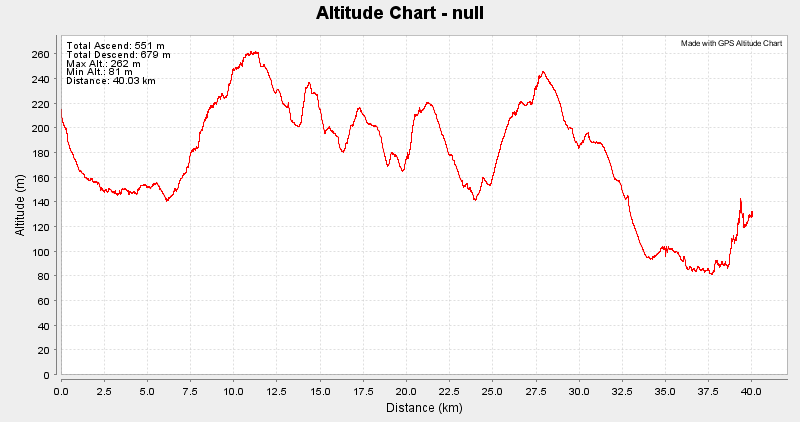
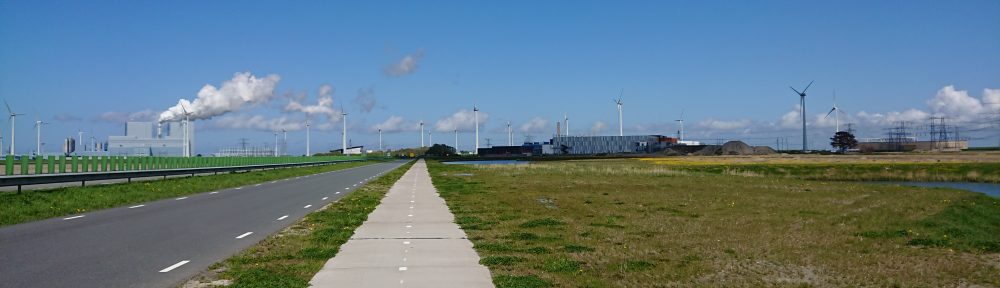
Failed to start the Eureka 210 today due to a sick primo: couldn’t justify being away for nearly 24 hours when he was so ill (was planning to stay near the start last night). However, did manage to get out today. 55 km, lots of hills, and about 45 minutes trying to pump up a tire with a defective mini-pump. Very foggy today, high winds too: good training!

Over Saddleworth and back by spandelles at Garmin Connect – Details.

“Training” for Brevets

When I started aiming for long distances (200km + at randonneur pace) I used to ride about 150km + per week. Much of that riding was fairly challenging, as I lived in Sheffield, itself built on seven hills, and embedded in the ‘scenic’ Peak National Park. Scenic is a word much beloved by the UK randonneuring cognoscenti: it translates as leg-breakingly hilly. Audax UK, who oversee randonneuring here, even have an audax altitude competition (AAA) giving points for scenic rides based on a formula. I even did interval training (the A57 into Sheffield from the West is great for hill intervals). My partner lived over the Snake Pass in Manchester, so many weeks I would supplement mid-week rides (I only worked 50% for much of this period) with 2 trips over one of the most challenging climbs in the area.

My level of fitness was high I guess, and I certainly could ride quite quick at times, although that never really translated into fast times for the events I rode, as most were so extreme that maintaining the average speed was a challenge for many. Although I am quite light, I am not that great a climber, and I have always struggled to maintain a high average speed on hilly rides. An organiser once expressed surprise that I was so close to the cut-off time, because I looked absolutely fine and organised on the bike: well at least I looked good!

As I have mentioned elsewhere on this blog, I struggle to find time to train much now. I have recently started to ride more than once a week again, but the maximum distance I tend to do is about 60km (although I sometimes ride to work and back in one day, two lots of 40km). Most of the rides include significant climbs, although I do have one ride to Hollingworth Lake which is relatively flat (and the final climb to the lake is good for intervals).

I own two books on training to ride long distance events. One is from the US, penned by Burke and Pavelka (The complete book of long distance cycling) and the other is Simon Doughty’s The Long Distance Cyclists’ Handbook. The latter is more to my taste, and presents some more realistic training plans; the former is aptly described thus by one of the Google Books reviewers, Ted:

This book made me tired by just reading it. However, it has some good tips on building endurance and how to avoid getting a sore ass from being on a bike so much.

I can safely say I have done little that resembles the structured training described in either book: moreover, I think if I had attempted to do so I would never have completed even a 100km brevet populaire, let alone a 400 at randonneur pace. I have neither the time nor the dedication to build slowly towards the longer distances, and hence suffer enormously during longer rides. However, I have never failed to complete a ride, although I have failed to start on occasion. I am probably risking my health by stressing an under-prepared body, but part of my plan for the next few years is simply to ride more often, and to ride more events.

My main shortcoming during longer distances has in the past been my abysmal average riding speed, although I may be basing this on the hilliness of my event choices. Although I have finished a 200 in around 10 hours, my experience at 400km was increasingly desperate: I did not ride fast enough to sleep, and had not accrued enough experience at long distances to create a plan for my ride. Hence, I was not even sure if I needed to sleep or not. This created extra stress, and one thing I really need to explore more is how to structure my riding in events. I actually managed on no sleep pretty well for the 24 hours it took me to complete 400km, but I am sure that for a 600km ride I need to ride fast enough to do more than power-nap. Hence I need to start working on my pace once I have a few more miles in my legs: this will probably involve intervals and the dreaded turbo-trainer, not something I am looking forward to.

Sunday’s ride is a fairly flat 200km, so I guess I will find out where I am starting from.
We say audax, you say randonnée…

Having failed to enter a single event in the last few years I have finally cracked and entered into what I hope will be a more continuous engagement with allure libre long distance cycling. I rode my first ‘audax‘(as us Brits wrongly call them for historic reasons) or Brevet Randonneur in the early 1990s, and although I always intended to ride a Super Randonneur series (200, 300, 400 & 600 all in one season) I never made it past the 400 mark, although the sole 400 I did ride was a challenging ride through the hills of North Yorkshire.

So, November 13 is the Eureka 210, a Peak Audax production across the Cheshire Plain into Wales: fairly flat, but prone to high winds and frosty weather. This could be the start of my journey towards the start lines of LEL2013 or PBP2015. Maybe some hard riding will stop me banging on about doping all the time. I intend to write a little here about equipment, clothing, preparation (oh yes) and terrain (generally ‘scenic’), and hopefully about some of the curious characters that make UK long distance riding so special.

Henri Desgrange, I hope I will not disappoint you…

Drugs are bad, mkay: why I still care about dope in cycling

In Paul Fournel’s wonderful essay on doping in Need for the Bike (Trans. A. Stoeckl, 2003: 123-125) he notes that it is doping that often makes racing hard, rather than the opposite, and that the effect of doping on onlookers can be more potent than its effect on competitors. Fournel is pretty agnostic on a personal level: for him, doping is too embedded in the sport to ever go away.

Whilst I agree with some of Fournel’s analysis, my own views have evolved in a rather different direction. I have written on this blog about the psychology of anti-doping, about the boundaries between forbidden performance enhancement and what is acceptable (in relation to music), and about our perceptions of doping and their relationship with notions of truth. It has become clear to me that doping matters to me in a way it does not to Fournel, and in this essay I will try to explain why. Continue reading

Who will profit from the Tour of Beijing: what does the I Ching say?

Many learned minds have been debating the implications for professional cycling of the of the forthcoming Tour of Beijing. David Millar (@millarmind) suggested on twitter that some of the discussion was lacking Asian context:

@TheRaceRadio @Vaughters This discussion is very western.

Some discussion with @accidentobizaro led us to attempt to divine who will profit using the ancient Chinese oracle, the I Ching, and hence redress this ethnocentrism.  I stroke my long white beard of wisdom… Continue reading

Bicycle racing, doping and crucifixion: Alfred Jarry revisited

The Passion Considered as an Uphill Bicycle Race

When Alfred Jarry wrote his interpretation of Jesus’ crucifixion it must have seemed a neat metaphor: the self-imposed yet stage-managed torture of the hill-climb is an apposite image to evoke self-sacrifice. Jarry also accentuates the technical and media-saturated aspect of this crucifixion: the crown of thorns becomes an advert for a puncture proof tire.

Of course, what with Lady Gaga, Madonna and Lloyd-Webber, the representation and artistic co-option of religious themes has become so commonplace as to evoke ennui; although of course some can still get overheated by a Piss Christ or Jerry Springer the Opera. As the juggernaut reaches ever closer to Armstrong and his cohorts and facilitators we seem to desire a quasi-religious cleansing (or stoning). Jarry’s essay serves to remind us that we should recognise the absurdity of such reactions, their atavism. Cheats and dopers deserve to be punished. But we deserve the same (oh, yes) if we don’t recognise our own complicity in this spectacle of the absurd.

For an antidote visit the wonderful world of Rainer Ganahl, such as this gem of mountain performance (with cowbells): The Passion Considered as an Uphill Bicycle Race or I wanna be Alfred Jarry, 1903 / 2011 or if you don’t have 16 minutes, ALFRED JARRY’S CALL OF NATURE.

Shooting the messenger: how to lose at anti-doping

In Italy, Mafia informers are shot or blown up. In cycling, dopers who inform on others aren’t blown up or shot, but they do risk being vilified for their actions by the very community they are acting to defend: some lose their jobs, some are insulted on twitter and in internet forums. Of course, their efforts to defend cycling from doping are paradoxically self-interested: most give up information in order to benefit themselves in some way, just as some keep quiet for the same reason. It is very rare for those directly involved in cycling to break Omerta otherwise (maybe Frankie Andreu is a nice example, although he had just a little help from the formidable Betsy). Continue reading

Commuting = Training?

As readers of this blog will know I have a slightly complex relationship with cycling. I do, like many non-racing cyclists, have an interest in maintaining and improving my cycling-specific fitness, and like many regard my riding as ‘training’, although given my lack of engagement with randonneuring at present, I am not quite sure what I am training for…

Continue reading